
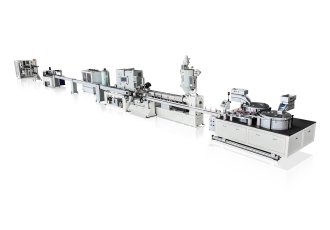
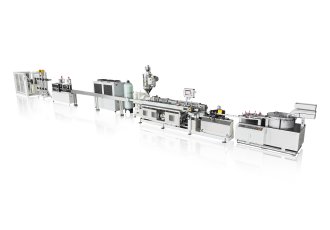


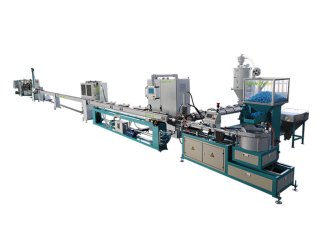
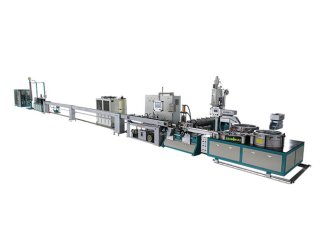
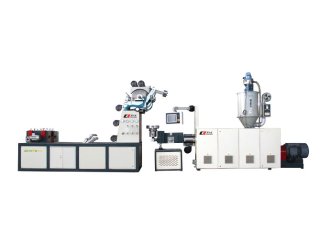


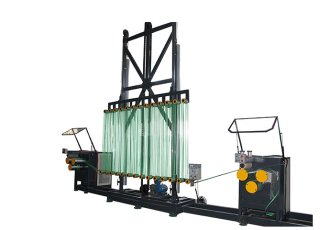





A high-speed drip tape production line may be advertised by its maximum line speed, but speed alone does not tell a factory how much saleable tape it can produce in a shift. Actual output also depends on tape dimensions, wall thickness, material throughput, emitter feeding, perforation, winding, product quality, and production downtime.
For equipment buyers, evaluating these factors before purchasing helps establish realistic production targets and compare machine configurations on a consistent basis. This guide explains the difference between line speed and finished output, how to measure production performance, and what to confirm with a supplier.
Table of Contents
● Line Speed vs. Actual Output
● How to Measure Actual Production Output
● Factors That Affect Drip Tape Output
● A Practical Output Calculation
● How to Assess Output During a Production Test
● Questions to Ask Before Buying
Line Speed vs. Actual Output
Line speed is usually expressed in meters per minute. Output may be measured as meters per hour, kilograms per hour, or finished rolls per shift. These figures describe different things and should not be compared without checking the product specification and measurement method.
A high line speed does not automatically mean the highest output by weight. Tape dimensions, wall thickness, polymer density, and the stability of downstream operations all influence material consumption and achievable production.
It is useful to distinguish between:
● Rated or maximum speed: the speed specified for the machine under defined conditions.
● Running output: the quantity produced while the line is operating.
● Shift output: the quantity produced over a scheduled period, including stops and changeovers.
● Saleable output: the quantity that meets the agreed product quality requirements.
When comparing suppliers, confirm which measure a quoted capacity refers to and under what tape specification and operating conditions it was achieved.
How to Measure Actual Production Output
Choose a measurement method that matches the factory's production target.
Output by length
Record the total length produced during a defined period. If the line runs at a stable measured speed, theoretical length per hour can be estimated as:
Theoretical length (m/h) = line speed (m/min) × 60
This estimate assumes continuous operation at that speed. It does not account for startup, stoppages, rejected tape, or roll changes.
Output by weight
Weigh the finished product produced over a defined period, or use verified length and measured product mass per unit length. Record the tape specification and whether the reported mass includes packaging, cores, or other components.
Saleable output
Separate accepted production from rejected material. For a useful performance report, record total production, rejected quantity, downtime, and the resulting quantity that meets the agreed quality criteria.

Factors That Affect Drip Tape Production Output
1. Tape dimensions and wall thickness
Tape dimensions and wall thickness affect material consumption per meter. A thinner-wall product may use less material per meter than a thicker-wall product, but achievable speed still depends on the line configuration, material behavior, cooling, and product quality requirements.
2. Extruder throughput and process stability
The extruder must supply a stable melt flow for the selected product. Actual output may be limited by the required dimensions and quality, not just by drive speed or the nominal capacity of an individual component.
3. Emitter feeding and insertion
For emitter-type drip tape, the feeding and insertion system must support the required line speed and emitter spacing. If this section cannot operate reliably at the target rate, the line may need to slow down or stop.
4. Cooling and haul-off
Cooling and haul-off conditions affect dimensional stability and tape handling. Suitable settings depend on the product specification and equipment design.
5. Perforation and winding
Perforation must meet the specified hole position and quality requirements. The winding system must also handle the running speed, roll length, and changeover method. A downstream limitation can reduce overall output even if the extruder can run faster.
6. Downtime, changeovers, and rejected material
Startup, adjustments, material changes, roll changes, maintenance, and quality rejects reduce the amount of saleable product produced in a shift. A short speed demonstration should therefore not be treated as proof of full-shift output.
A Practical Output Calculation
For length-based output, use this initial estimate:
Estimated running length = measured average running speed × actual running minutes
For example, if a line averages 100 m/min while running and operates for 420 minutes during a shift, its theoretical running length is 42,000 meters. This example assumes the stated average speed applies throughout the running time. It is not a claim about the output of a particular machine.
To calculate saleable output, subtract rejected material and account for downtime consistently. If reporting by weight, use the actual measured mass of accepted tape or a verified mass-per-meter value for the exact product specification.
When comparing machines, use the same tape dimensions, wall thickness, emitter spacing, quality criteria, shift duration, and downtime rules. Otherwise, the results may not be comparable.
How to Assess Output During a Production Test
1. Agree on the product specification before the test, including dimensions, wall thickness, emitter spacing, perforation, and roll length.
2. Confirm how line speed and output will be measured and which instruments or counters will be used.
3. Allow the line to reach stable operating conditions before recording the test period.
4. Record running speed, actual running time, stoppages, changeovers, and material used.
5. Inspect samples against the agreed quality criteria, including dimensions, emitter spacing, and perforation here applicable.
6. Measure accepted product by length or weight using an agreed method.
7. Document the product specification, settings, test duration, rejected quantity, and calculation method in the test report.
A test report is more useful when it records both output and quality. Acceptance criteria should be agreed with the supplier in advance and reflect the intended product and production conditions.
Questions to Ask Before Buying a High-Speed Drip Tape Production Line
● What tape dimensions and wall thickness were used to determine the stated line speed?
● Does the quoted capacity refer to maximum running speed, output per hour, or output over a full shift?
● What emitter type and spacing can the feeding system support at the required speed?
● How are perforation and winding coordinated with the main line?
● What product quality checks will be used during the acceptance test?
● Can the supplier evaluate the target product specification before confirming the proposed configuration?
Providing these details helps the manufacturer evaluate the project against the intended production requirements rather than relying on a speed figure alone.

Frequently Asked Questions
Does a higher line speed always mean higher production output?
No. Output also depends on product dimensions, wall thickness, stable material throughput, downstream equipment, downtime, and the amount of accepted product.
How can I estimate drip tape production per hour?
For a first estimate by length, multiply the measured running speed in meters per minute by 60. For shift output, use actual running time and account for stops and rejected product. Weight-based output requires a verified mass measurement or mass per meter for the specified tape.
Why can actual output be lower than rated capacity?
Rated capacity may describe operation under specified conditions. Actual production can be affected by product specifications, startup and changeover time, process adjustments, downstream limits, maintenance, and quality rejects.
What should be included in a drip tape line acceptance test?
Agree on the product specification, test duration, speed and output measurement methods, quality criteria, downtime recording, and how rejected material will be treated in the final calculation.
Discuss Your Drip Tape Production Target
Planning a high-speed drip tape manufacturing project? Share your target tape dimensions, wall thickness, emitter spacing, expected output, and working schedule. Our team can review your requirements and discuss a suitable production line configuration and the details to confirm during acceptance testing.
